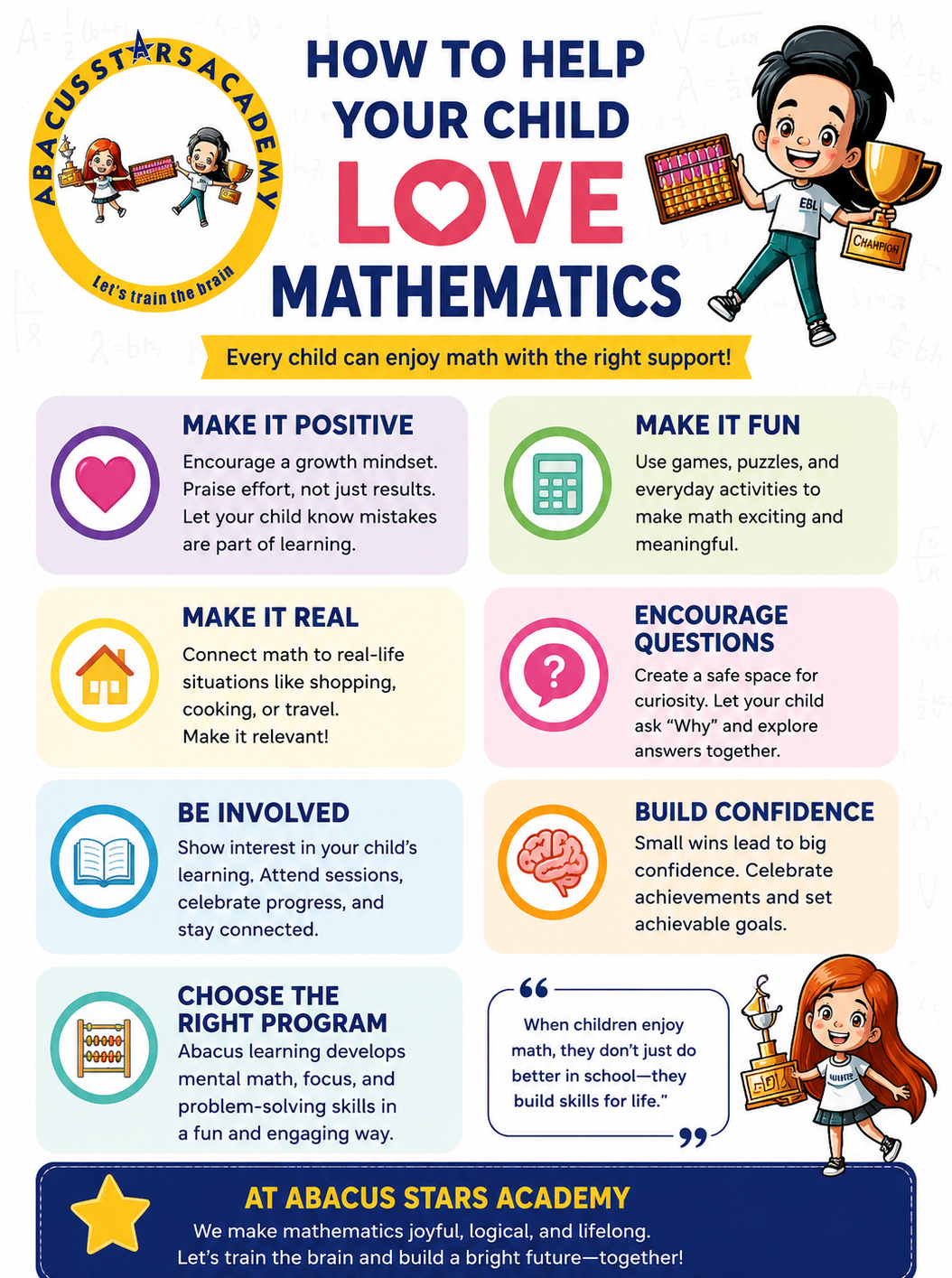
Many children grow up believing that mathematics is difficult, boring, or only for “smart students.” In reality, mathematics can be one of the most enjoyable and confidence-building subjects when introduced the right way. The key is not forcing children to memorize formulas, but helping them experience numbers in a fun and engaging way.
At Abacus Stars Academy, we believe every child can develop a love for mathematics when learning becomes interactive, visual, and confidence-driven.
Below are practical ways parents can help their children build a strong and positive relationship with mathematics.
1. Remove the Fear Around Mathematics
Many children develop fear because they hear statements like:
“Math is very difficult.”
“I was never good at math.”
“You must score full marks.”
These messages create pressure and anxiety.
Instead, encourage your child by saying:
“Math is like a puzzle.”
“Let's solve it together.”
“Mistakes help us learn.”
When children feel safe to make mistakes, they become more willing to try.
2. Make Math Part of Daily Life
Mathematics becomes interesting when children see how it works in real life.
You can involve them in simple activities like:
Counting fruits while shopping
Measuring ingredients while cooking
Calculating change while paying bills
Estimating travel time or distances
These activities show that math is not just a school subject — it is a life skill.
3. Use Visual Learning Methods
Children learn faster when they can see and touch numbers rather than only reading them in textbooks.
Tools like the abacus help children:
Visualize numbers clearly
Understand addition and subtraction easily
Develop strong mental calculation skills
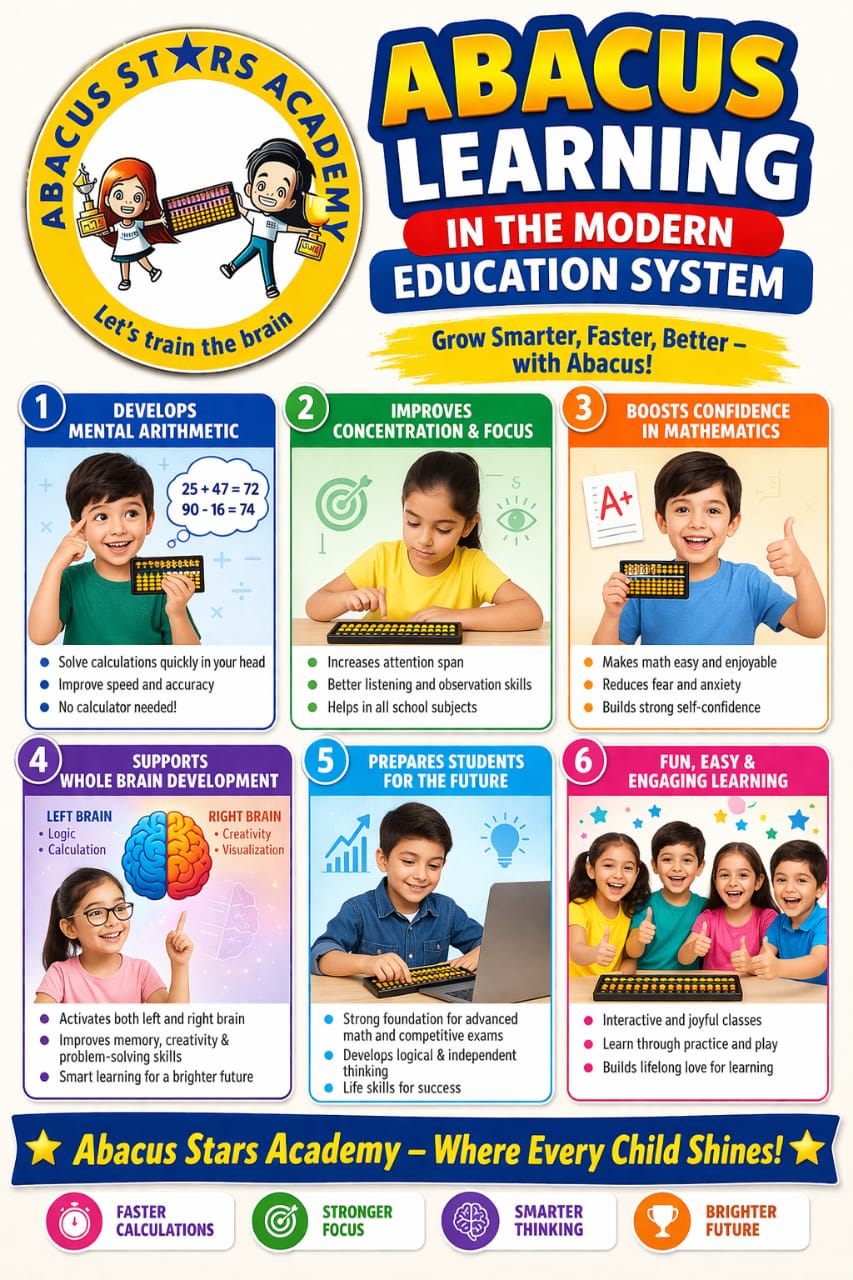
This method activates both sides of the brain and makes learning math more enjoyable.
4. Encourage Mental Math Practice
Mental math builds speed, confidence, and concentration.
You can try fun challenges like:
“What is 25 + 37?”
“How much is 50 minus 19?”
“What is double of 14?”
Keep the environment playful. Celebrate quick thinking rather than perfect answers.
5. Turn Math Into Games
Games remove the seriousness of learning and make children curious.
Some simple ideas include:
Number puzzles
Math riddles
Flash card competitions
Timed calculation challenges
When learning becomes a game, children practice without feeling pressured.
6. Appreciate Effort, Not Just Marks
Many children stop enjoying mathematics because they are judged only by exam scores.
Instead of focusing only on marks:
Appreciate their effort
Celebrate improvement
Encourage consistent practice
Confidence is one of the most powerful tools for learning mathematics.
7. Introduce Structured Skill Programs
A structured learning system can dramatically improve a child’s math abilities.
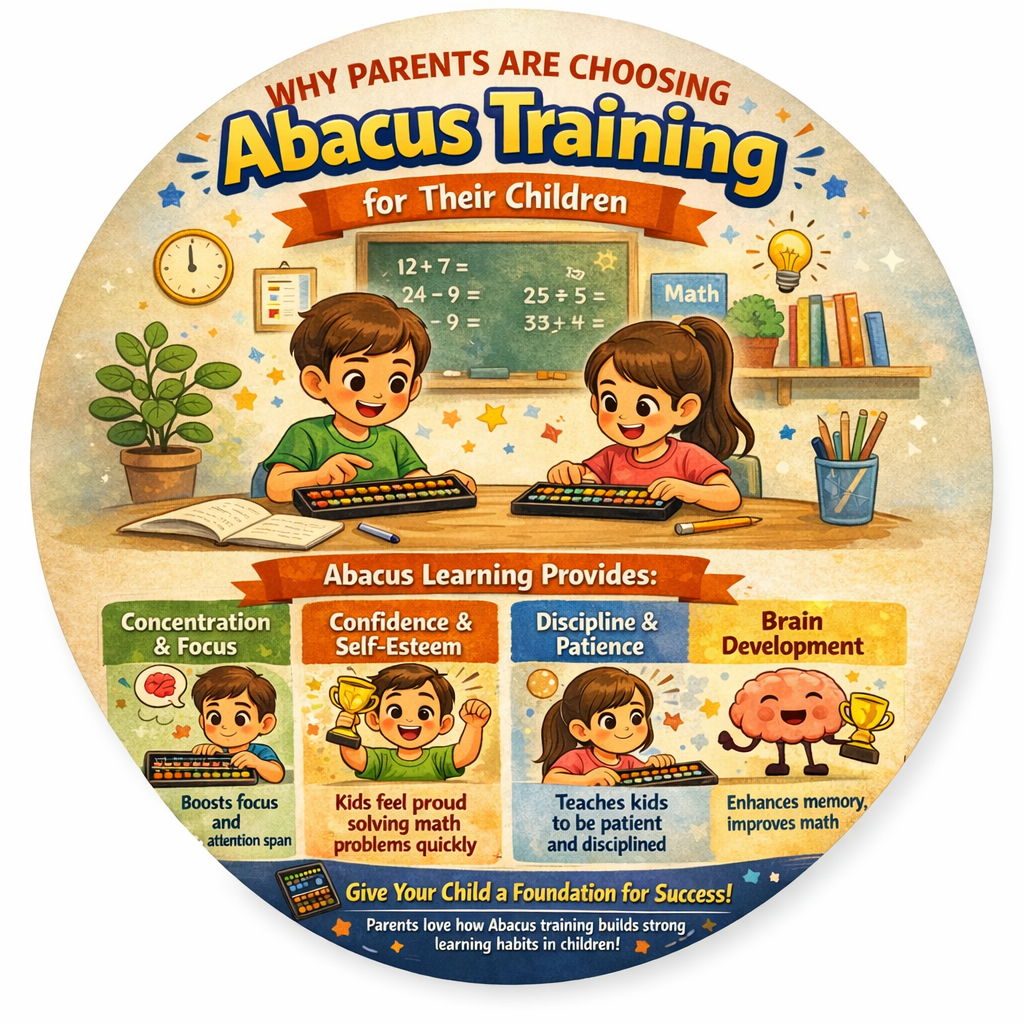
Programs like abacus training help children:
Calculate faster
Improve memory and concentration
Develop logical thinking
Build strong academic confidence
Children trained with abacus techniques often perform calculations faster than calculators because they visualize numbers mentally.
Why Abacus Training Works
At Abacus Stars Academy, we use scientifically designed techniques that combine:
Visual learning
Finger movement coordination
Brain activation exercises
Speed and accuracy training
This method strengthens both left and right brain development, improving not only mathematics but also memory, concentration, and overall learning ability.
Final Thoughts
Helping children love mathematics is not about forcing them to study harder. It is about making numbers exciting, visual, and meaningful.
When children enjoy learning math, they develop:
Strong problem-solving skills
Confidence in academics
Logical thinking abilities
Faster calculation skills
With the right guidance and engaging methods, every child can discover that mathematics is not difficult — it is fascinating.
Abacus Stars Academy Building Young Mathematical Geniusess